Why Flower Prices from Africa Change Weekly ?
Understanding price fluctuations in flowers from Kenya and Ethiopia
Flower buyers across Europe often notice that prices from Kenya and Ethiopia can change from one week to another. These fluctuations are not random — they are driven by a combination of logistics, production cycles, and global demand.
Understanding these factors is essential for importers looking to secure stable supply and control costs.
Air freight costs and flower pricing
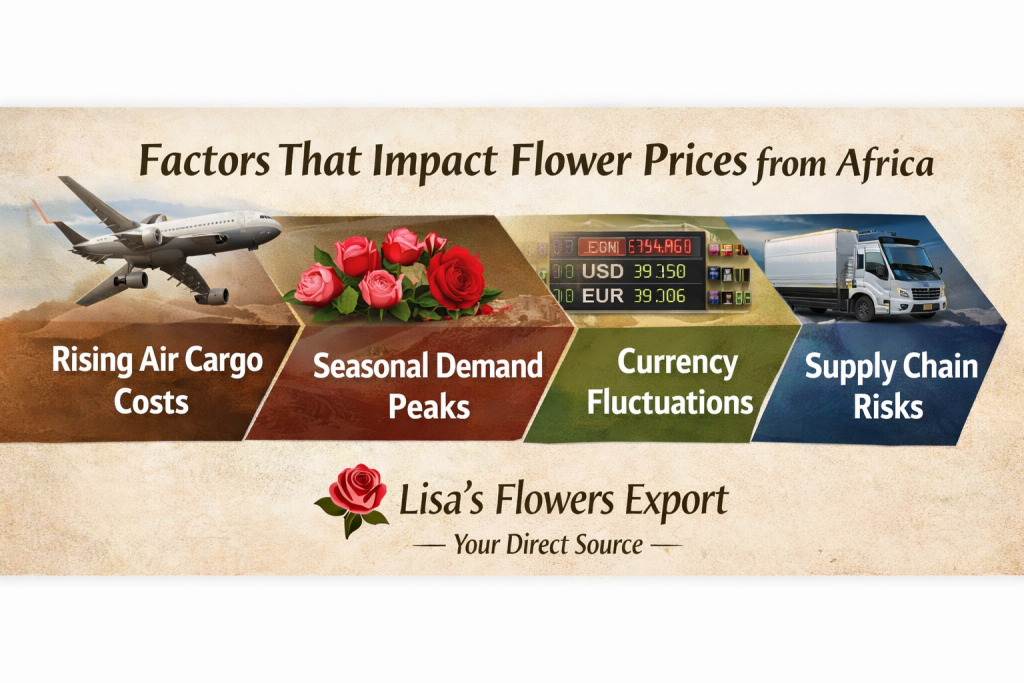
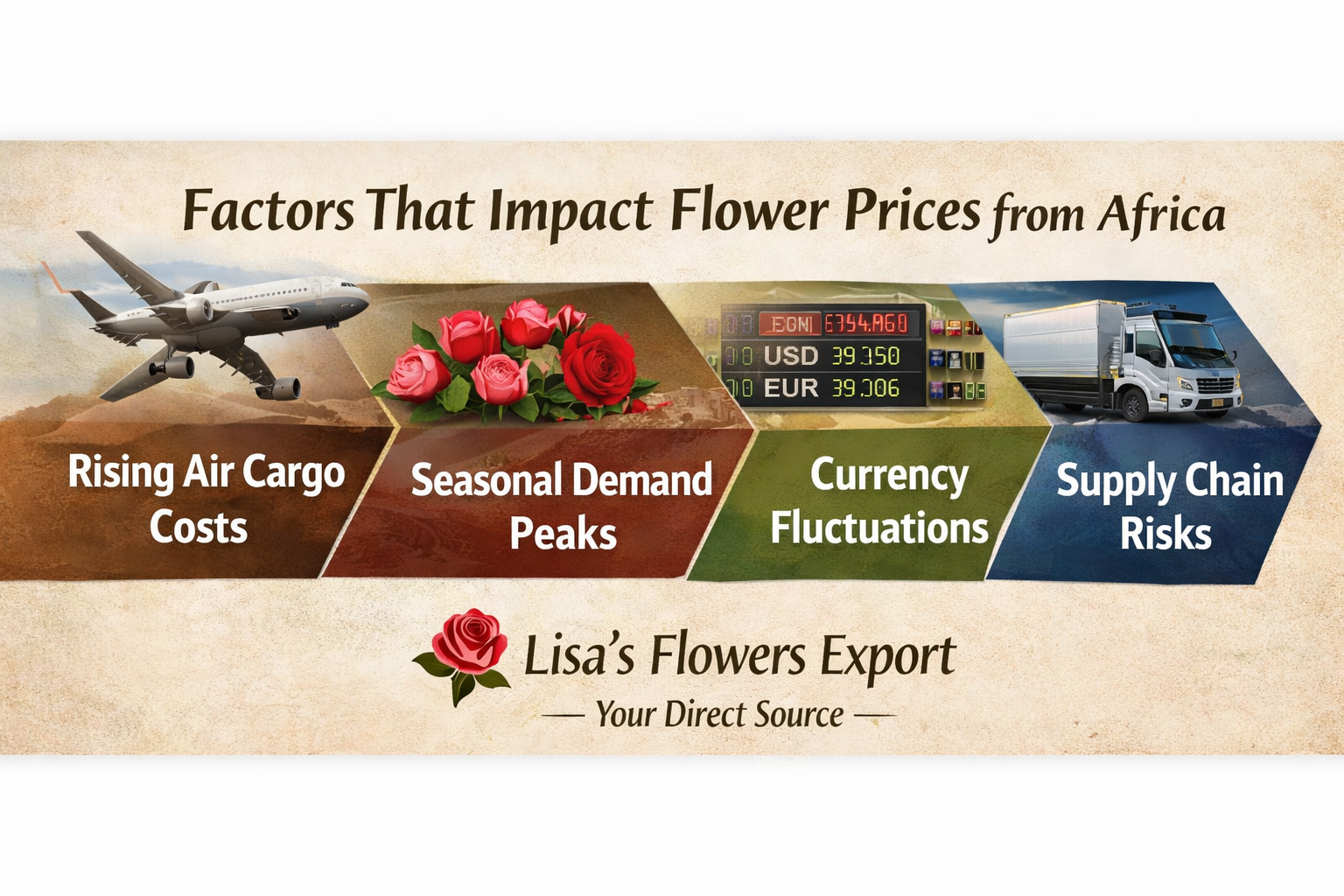
Fresh flowers from Kenya and Ethiopia depend on air transport to reach Europe quickly. As a result, air freight costs are one of the main drivers of weekly price changes.
When cargo space is limited or fuel prices increase, the cost of transporting flowers rises — and this directly affects wholesale prices. During peak export periods, limited cargo availability can push prices up significantly within a short time.
Seasonality in Kenya and Ethiopia flower production
Although both countries benefit from favorable climates, flower production still varies throughout the year.
Rainfall, temperature variations, and farm production cycles all influence supply levels. When production decreases, prices tend to rise. When availability is high, prices stabilize or become more competitive.
Global demand peaks for flowers
Flower demand is highly seasonal across Europe and international markets.
Key periods such as Valentine’s Day, Mother’s Day, Christmas, and wedding seasons create strong demand spikes. During these times, farms prioritize larger buyers, and prices can increase rapidly, sometimes within the same week.
Currency fluctuations and international trade
The international flower trade involves several currencies, including the euro (EUR), US dollar (USD), Kenyan shilling (KES), and Ethiopian birr (ETB).
Exchange rate fluctuations can impact export costs and influence final pricing for European buyers. Even small currency shifts can affect margins and pricing consistency.
Logistics and supply chain risks
Logistics play a critical role in the flower industry. Any disruption in the supply chain can affect both availability and pricing.
Examples include flight delays, airport congestion, customs clearance issues, or interruptions in the cold chain. Since flowers are highly perishable, even minor disruptions can lead to price adjustments.
Differences in farms and flower quality
Not all farms in Kenya and Ethiopia produce the same quality or quantities.
Factors such as altitude, farming techniques, and certifications influence both the quality and consistency of flowers. Premium farms offering high-quality roses and varieties tend to maintain more stable pricing, while lower-tier production may fluctuate more.
How to manage price fluctuations when importing flowers
For importers and wholesalers, price changes are part of the business. The key is not to avoid fluctuations, but to manage them effectively.
Working with reliable suppliers, planning ahead, and diversifying sourcing strategies can help ensure more stable supply and better cost control.
A more stable flower supply with Kenya and Ethiopia sourcing
At Lisa’s Flowers Export, we source directly from selected farms in both Kenya and Ethiopia.
By working across two major production regions, we are able to balance supply, reduce dependency on a single origin, and adapt quickly to changes in availability and pricing.
This approach allows us to offer more consistent supply and helps our clients mitigate the impact of weekly price fluctuations, ensuring greater reliability in a dynamic market.
Looking for stable wholesale flower supply?
If you are sourcing wholesale flowers from Kenya and Ethiopia and want greater price stability and consistency, Lisa’s Flowers Export offers tailored solutions based on your needs.
Contact us to explore reliable supply options adapted to current market conditions.