Kenya and Ethiopia: How Africa’s Flower Powerhouses Are Shaping Global Supply — and New Opportunities for Buyers

Kenya and Ethiopia have firmly established themselves as two of the most influential players in the global floriculture industry. With favorable climates, high-altitude growing conditions, and year-round sunshine, both countries offer ideal environments for producing high-quality cut flowers at scale.
While traditionally focused on exports to Europe, these two countries are now increasingly shaping supply chains across Africa, the Middle East, and emerging markets, creating new opportunities for buyers looking for reliable and flexible sourcing.
🌹 Kenya: A Global Leader in Flower Exports
Kenya remains one of the world’s top flower exporters, ranking among the top four globally, alongside the Netherlands, Colombia, and Ecuador.
The country generates over $500 million annually from floriculture, supported by more than 120 commercial flower farms. It supplies approximately 40% of Europe’s cut flower imports and accounts for over 15% of global flower trade.
The success of Kenya’s flower industry is supported by:
- strong logistics infrastructure
- direct air cargo connections via Nairobi
- established compliance with international standards
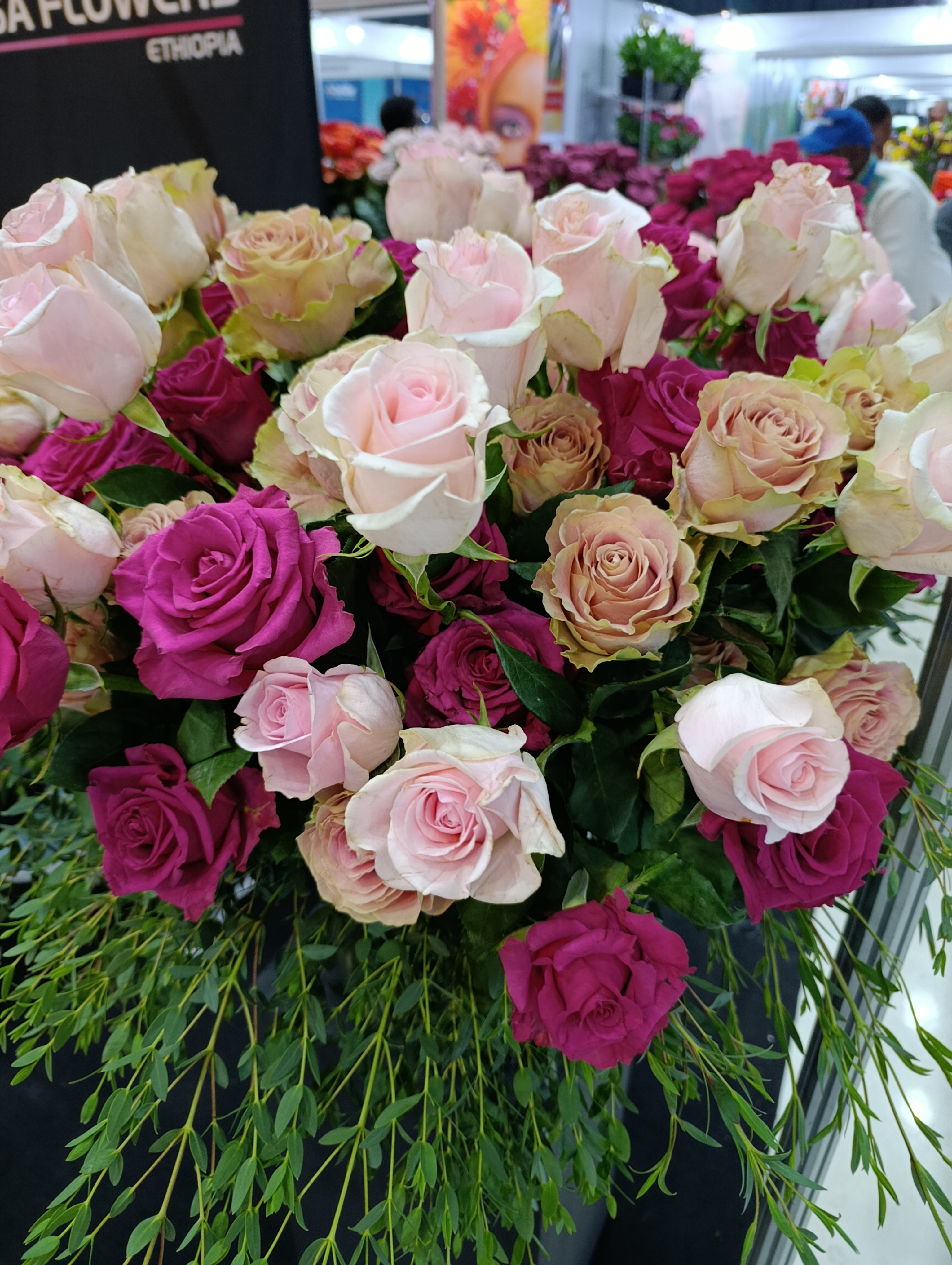
 Roses dominate the sector, representing more than 65% of export value, with increasing diversification into summer flowers such as Limonium, Solidago, and Hypericum and other summer flowers.
📈 Ethiopia: A Fast-Growing Export Power
Ethiopia has rapidly become Africa’s second-largest flower exporter and a top-four global supplier.
The country’s floriculture sector continues to expand, driven by:
- modern farming technologies
- climate-smart production methods
- improved access to international markets
In the 2024/25 fiscal year, Ethiopia generated approximately $564.9 million in horticulture exports, with cut flowers contributing a significant share.
Ethiopia is also increasingly recognized for:
- high-quality roses
- competitive pricing
- expanding production capacity
👉 The sector remains one of the country’s top foreign exchange earners, contributing over 80% of horticulture export revenues.
🌼 Market Trends: Diversification Beyond Roses
While roses remain the dominant product, the industry is evolving.
Both Kenya and Ethiopia are expanding production into:
- summer flowers
- fillers and foliage
- eucalyptus and alternative varieties
This diversification reflects changing global demand, especially in:
- event floristry
- mixed bouquets
- cost-sensitive markets
👉 Buyers are increasingly looking for variety, flexibility, and value, not just standard rose supply.
🌍 Shifting Export Markets and New Trade Routes
Historically, Europe has been the primary destination for flowers from Kenya and Ethiopia.
However, both countries are actively diversifying toward:
- the Middle East (UAE, Saudi Arabia, Qatar)
- Africa (regional trade)
- Asia (including China)
👉 This shift reduces dependency on European markets and creates new opportunities for wholesale flower suppliers serving emerging regions.
⚠️ Current Challenges in the Flower Industry
Despite strong fundamentals, the industry is facing challenges.
Recent geopolitical tensions and disruptions in the Middle East have affected:
- demand levels
- cargo routes
- delivery timelines
Kenya’s floriculture sector has reported losses of up to $1.4 million per week in certain periods, while some Ethiopian exporters targeting Gulf markets have seen significant drops in revenue.
Additionally, factors such as:
- fluctuating freight costs
- currency pressures
- regional instability
continue to impact the industry.
📊 Pricing Adjustments and Industry Adaptation
In response to market pressures, Ethiopia introduced new minimum pricing structures for cut flowers, including a 7–11% increase for roses depending on production zones.
This move aims to:
- stabilize the sector
- improve foreign currency earnings
- maintain quality standards
👉 It also reflects a broader trend toward more structured and regulated supply chains.
🚀 Opportunities for Buyers: Flexibility and Strategic Sourcing
In this evolving market, buyers are increasingly looking for:
- stable pricing
- flexible supply options
- reliable sourcing partners
This is where working with suppliers sourcing from both Kenya and Ethiopia becomes a major advantage.
🌐 Why Dual Sourcing Matters
Lisa’s Flowers Export works directly with farms in both Kenya and Ethiopia, allowing us to:
- offer greater product availability
- maintain flexibility across seasons
- adapt to market fluctuations
- help stabilize pricing when supply shifts
👉 This dual sourcing model is particularly valuable in times of:
- logistical disruptions
- regional demand shifts
- pricing volatility
📦 Supporting Buyers Across Africa and the Middle East
As demand grows across Africa and the Gulf region, buyers increasingly need suppliers who understand:
- regional logistics
- flexible order sizes
- market-specific requirements
Lisa’s Flowers Export supplies:
- wholesale roses from Kenya
- spray roses and summer flowers
- flowers sourced from Kenya and Ethiopia
We work with florists, wholesalers, and event businesses across Africa and the Middle East, offering a practical and reliable supply solution.
📈 Conclusion: A Market in Transition — and Full of Opportunity
The floriculture industries of Kenya and Ethiopia remain strong, but they are also evolving.
With:
- expanding global demand
- diversification of products
- new regional markets emerging
👉 the future of flower trade is becoming more dynamic and interconnected.
For buyers, this creates an opportunity to:
- diversify sourcing
- secure more stable supply chains
- work with flexible wholesale flower suppliers
 Looking for a Reliable Wholesale Flower Supplier?
If you are looking for:
- wholesale roses Kenya
- a flower exporter Ethiopia
- a reliable wholesale flower supplier
Lisa’s Flowers Export offers:
👉 flexible sourcing
👉 competitive pricing
👉 direct communication
Contact us on WhatsApp to:
- receive current prices
- check availability
- discuss your requirements