How Much Does It Cost to Import Flowers from Kenya? Complete Cost Breakdown
Kenya is one of the world’s leading sources of fresh-cut flowers, supplying roses, spray roses, gypsophila, carnations, chrysanthemums, alstroemeria, lilies and many other varieties to international markets.
But if you are a wholesaler, florist, event supplier, supermarket supplier or distributor considering importing directly from Kenya, one of the first questions is:
How much does it actually cost to import flowers from Kenya?
The answer depends on much more than the price of the flowers themselves. Airfreight, packing, export documentation, handling and charges in the destination country all contribute to the final landed cost.
In this guide, Lisa’s Flowers Export explains the main costs you should consider before placing an order.
1. The Price of the Flowers
The first component is the purchase price of the flowers at origin.
Flower prices in Kenya vary according to several factors:
- Flower variety
- Stem length
- Head size and grade
- Season
- Farm and growing region
- Quantity ordered
- Market demand
- Special occasions such as Valentine’s Day, Mother’s Day and Christmas
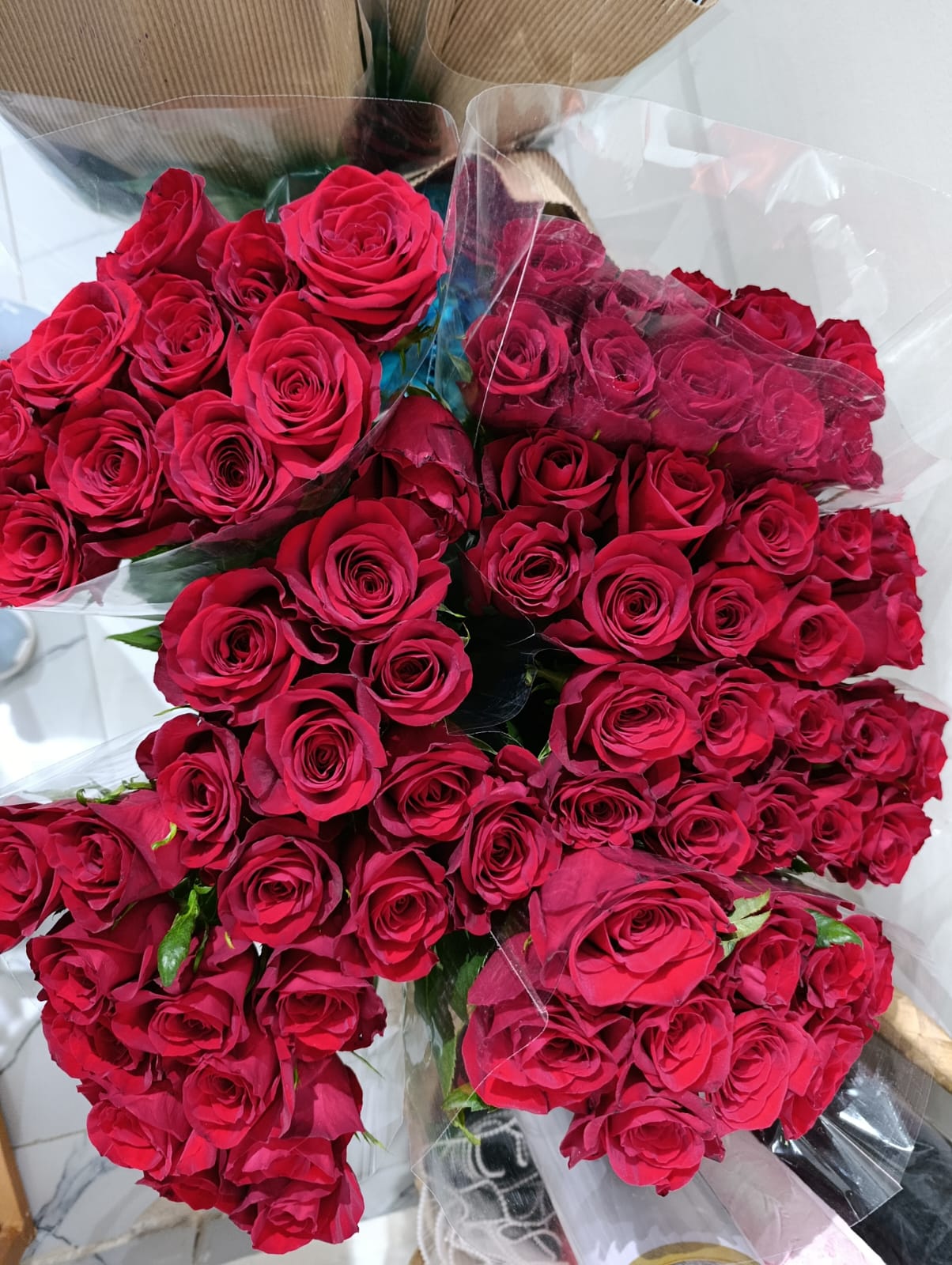
For roses, for example, a 40 cm standard rose will normally cost less than a premium 60, 70 or 80 cm rose with a larger head.
Prices can also change significantly during high-demand periods. This is why professional flower importers generally request a current quotation rather than relying on a fixed annual price list.
At Lisa’s Flowers Export, we source from different farms in Kenya, allowing us to compare availability, quality and price according to each buyer’s requirements.
2. Packing Costs
Fresh flowers need professional export packaging designed to protect them throughout transport while keeping the shipment as efficient as possible.
Depending on the flower and destination, packing can include:
- Export flower boxes
- Sleeves
- Bunching materials
- Protective paper or wrapping
- Hydration materials where required
- Labels
- Internal supports and protective packaging
Packing configuration is important because airfreight is generally calculated according to the shipment’s chargeable weight.
Efficient packing can therefore make a significant difference to the final cost per stem.
This is why the cheapest flower price does not necessarily result in the lowest landed price.
3. Transport from the Farm
Many Kenyan export flowers are grown in established floriculture regions around Naivasha, Nakuru and other high-altitude growing areas.
Once flowers are harvested, they must move through the supply chain quickly while maintaining appropriate temperature conditions.
Depending on the order, flowers may need to be transported from one or several farms to a consolidation or cargo facility before export.
Farm collection, consolidation and handling therefore need to be considered when calculating the complete logistics cost.
4. Export Documentation and Phytosanitary Requirements
Fresh-cut flowers are agricultural products and are subject to phytosanitary requirements.
Flowers intended for export from Kenya may require inspection and phytosanitary certification before leaving the country. Requirements can also vary according to the destination.
Importers should therefore check the applicable requirements in their own country before ordering.
Working with an experienced flower sourcing and export partner can make this process considerably easier, particularly for buyers importing directly from East Africa for the first time.
5. Airfreight – One of the Most Important Costs
For many destinations, airfreight is one of the largest additional costs when importing fresh flowers from Kenya.
Flowers are highly perishable, so fast transportation and proper handling are essential.
The freight rate depends on several factors:
- Destination airport
- Airline and route
- Total shipment weight
- Available cargo capacity
- Season
- Fuel costs
- Direct or connecting flight
- Current demand for air cargo
Freight rates can change, which is why they should always be confirmed when preparing an actual order.
Why Order Size Matters
Very small direct-import orders can be relatively expensive because certain logistics and handling costs must be distributed across a small number of stems.
Consider two buyers purchasing the same rose.
One buyer imports 1,000 stems, while another imports 5,000 stems.
Even if the flower price is identical, the larger shipment can potentially achieve a more attractive landed cost per stem because some logistics costs are spread across a greater quantity.
For professional importers, it is therefore important to consider the total shipment economics, not only the farm price.
6. Airport Handling and Cargo Charges
The logistics cost can also include charges related to cargo handling and export preparation.
Depending on the route and arrangement, these may include:
- Cargo handling
- Security charges
- Documentation
- Terminal services
- Export handling
- Other logistics-related charges
When comparing quotations from flower suppliers, always check exactly what is included.
A low flower price can look attractive initially but become much less competitive after all additional costs are added.
7. Import Duties, Taxes and Destination Charges
The cost of importing flowers does not necessarily stop when the shipment arrives at the destination airport.
Depending on the importing country, additional expenses can include:
- Customs clearance
- Import duties where applicable
- VAT or other taxes
- Phytosanitary inspection
- Customs broker fees
- Airport handling
- Storage charges
- Refrigerated transport from the airport
These costs vary significantly from one country to another.
For example, an importer receiving flowers in Luanda, Accra, Dubai, Mauritius or another international destination may face different local procedures and charges.
Importers should therefore include destination costs when calculating their real landed price.
8. FOB vs C&F: Understand Your Quotation
It is important to understand the commercial basis of your quotation.
FOB / Origin-Based Supply
With an origin-based arrangement, the buyer organises or takes responsibility for international freight according to the agreed commercial terms.
This may be suitable for established importers who already work with their own freight agents or have negotiated cargo arrangements.
C&F
With a C&F quotation, the agreed cost includes the flowers and freight to the specified destination according to the quotation.
This can make budgeting easier for buyers because more of the transport cost is known before confirming the order.
Lisa’s Flowers Export can supply flowers FOB Nairobi and can also arrange C&F shipments depending on the destination and requirements.
9. How to Calculate Your Real Landed Cost
Imagine an order of 4,000 roses from Kenya.
The calculation could look like this:Cost ComponentCalculationFlowersPrice per stem × 4,000Export packingAccording to packing configurationFarm & consolidation logisticsAccording to farms/orderDocumentation & export handlingAccording to shipmentAirfreightChargeable weight × current freight rateDestination chargesAccording to importing countryTotal landed costAll applicable costs combined
The importer can then calculate:
Total landed cost ÷ number of stems = landed cost per stem
For example, if the complete cost of an illustrative 4,000-stem shipment were USD 1,600:
USD 1,600 ÷ 4,000 = USD 0.40 per stem
The USD 0.40 landed price – rather than simply the original flower price – is what should be considered when calculating your wholesale or retail margin.
Important: This example is provided only to explain the calculation. It is not a current quotation. Flower prices and freight rates fluctuate according to season, availability, destination and market conditions.
10. Don't Compare Flower Suppliers Only on Price per Stem
This is one of the most common mistakes when comparing flower suppliers.
Supplier A may quote a lower price per stem than Supplier B.
But that does not automatically mean Supplier A offers the better deal.
The real calculation should consider:
Flower price + quality + packing efficiency + freight + vase life + sellable stems + potential losses = real value
A cheap flower that arrives damaged, dehydrated or inconsistently graded can ultimately be considerably more expensive than a slightly higher-priced flower that arrives in excellent condition.
Professional flower buyers should therefore compare landed cost and sellable quality, rather than price per stem alone.
11. Can You Mix Different Flowers in One Order?
Yes.
One of the advantages of working with Lisa’s Flowers Export is access to a broad range of flowers from different farms.
Depending on availability and logistics, buyers can source products including:
- Premium roses
- Standard roses
- Spray roses
- Gypsophila
- Chrysanthemums
- Carnations
- Alstroemeria
- Hydrangea
- Lilies
- Delphinium
- Hypericum
- Seasonal flowers
- Summer flowers and fillers
This can be particularly useful for wholesalers, florists, distributors and event suppliers who need a varied assortment rather than a large quantity of only one flower.
12. Kenya or Ethiopia – Can the Origin Affect Your Cost?
Yes.
Lisa’s Flowers Export sources flowers from both Kenya and Ethiopia, giving buyers more sourcing possibilities.
Kenya offers an exceptionally broad assortment and is particularly attractive for premium roses, specialty flowers and summer flowers.
Ethiopia can offer very competitive sourcing opportunities for certain standard roses, spray roses and high-volume products.
Instead of automatically purchasing everything from one country, buyers can evaluate the best sourcing solution based on:
- Price
- Quality
- Flower variety
- Stem length
- Availability
- Required volume
- Freight
- Destination
Our role is to help buyers find the most suitable solution for their particular market.
13. What Information Do We Need to Prepare a Quotation?
If you would like to know the actual cost of importing flowers to your country, send us:
- Destination country and airport
- Flowers or varieties required
- Preferred stem lengths
- Approximate quantity
- Required delivery date
- Whether you require flowers only or flowers plus freight
We can then check current availability and pricing and evaluate the logistics options for your destination.
Start Importing Fresh Flowers from Kenya
Importing flowers directly from Kenya can give wholesalers, distributors, florists, supermarkets, hotels and event suppliers access to a broad selection of fresh flowers at professional wholesale prices.
However, successful importing is about much more than finding the lowest price at the farm.
The objective is to obtain the right combination of quality, freshness, logistics and landed cost for your market.
Lisa’s Flowers Export sources fresh flowers from selected farms in Kenya and Ethiopia and assists international buyers with sourcing, consolidation, export preparation and logistics.
Request a Flower Quotation
Would you like to know how much it would cost to import fresh flowers to your country?
Send us your flower requirements, quantities and destination and we will help you evaluate the most suitable sourcing option.
Lisa’s Flowers Export
Fresh Flowers from Kenya & Ethiopia to the World
Website: www.lisasflowersexport.com
Email: info@lisasflowersexport.com
WhatsApp: +254 755 855 955
Contact us today for current flower availability, prices and freight options for your destination.