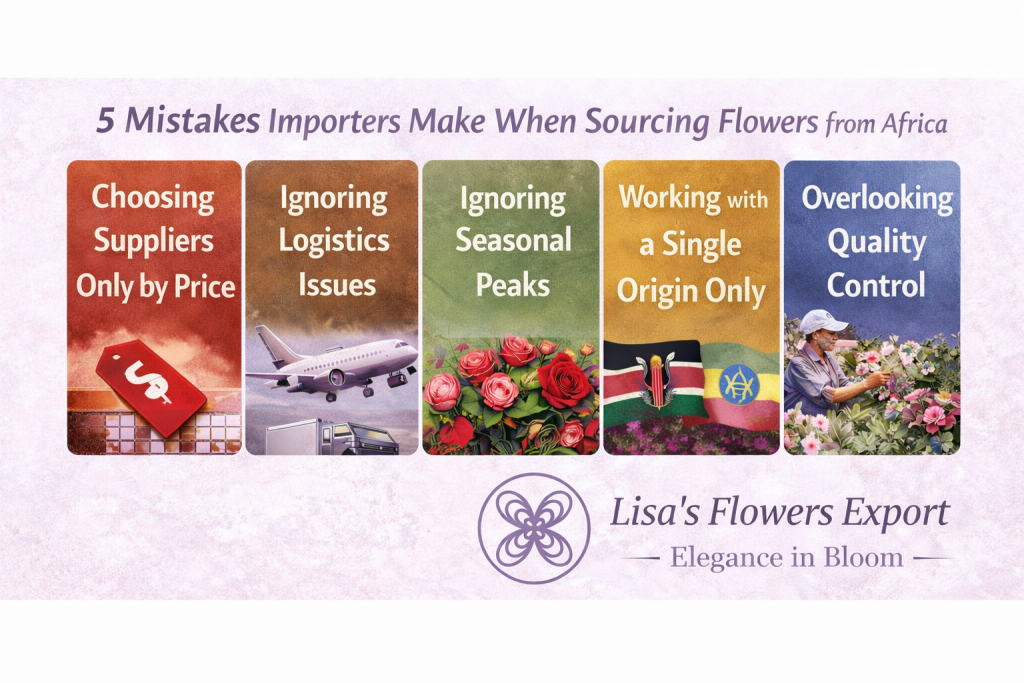
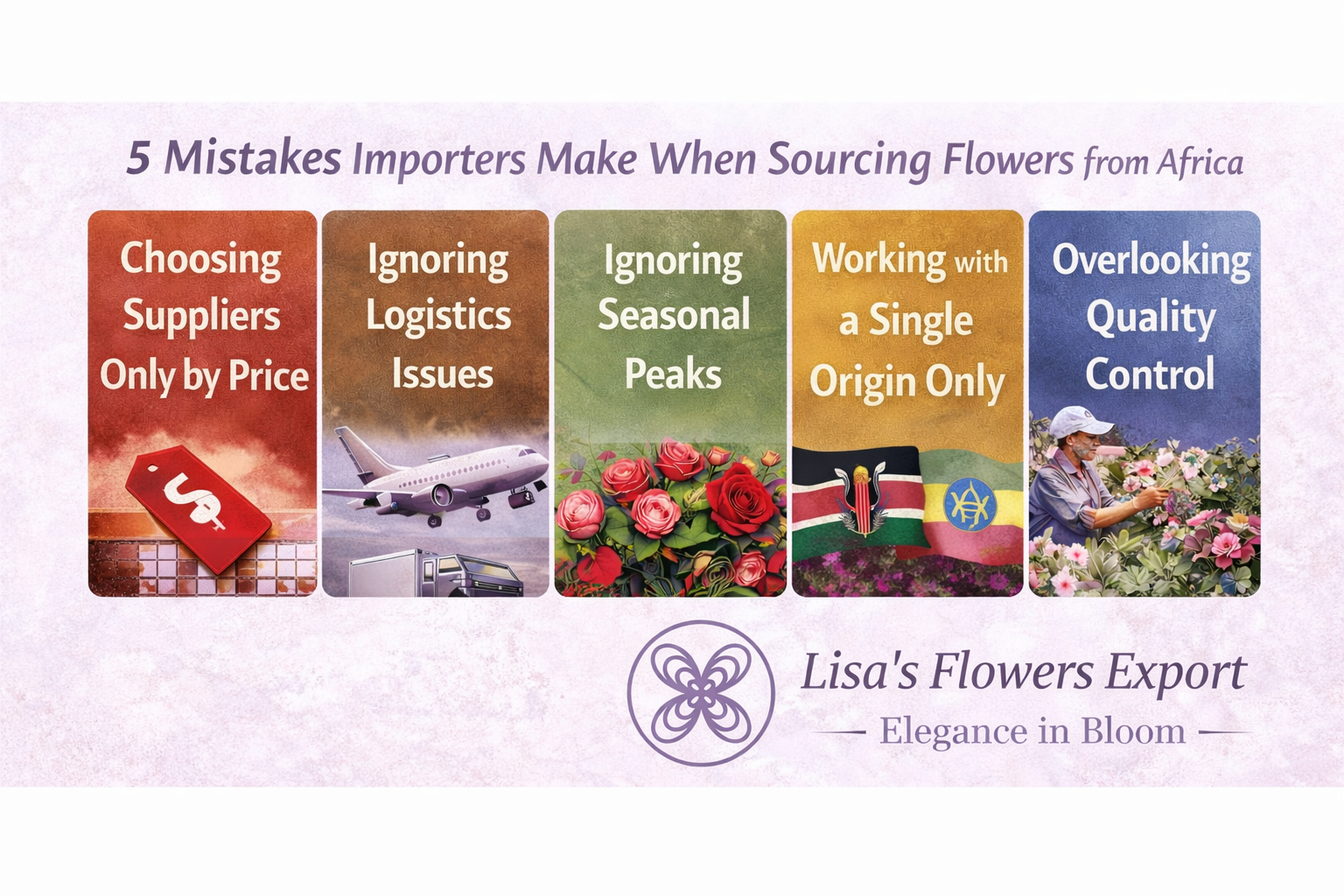
5 Mistakes Importers Make When Sourcing Flowers from Africa
Avoid costly errors when importing flowers from Kenya and Ethiopia
Importing flowers from Kenya and Ethiopia offers major advantages — competitive pricing, high-quality roses, and year-round availability.
However, many importers make critical mistakes that lead to delays, inconsistent quality, and unexpected costs.
Understanding these pitfalls can help you build a more reliable and profitable supply chain.
1. Choosing suppliers based only on price
One of the most common mistakes is selecting a supplier purely based on the lowest price.
 While low prices may seem attractive:
- quality can be inconsistent
- stems may not meet required standards
- packing and handling may be suboptimal
In the flower business, poor quality quickly translates into losses.
A slightly higher price from a reliable supplier often results in better margins overall.
2. Ignoring logistics and air freight realities
Flowers are highly perishable and depend entirely on efficient logistics.
Many buyers underestimate:
- air cargo availability
- flight schedules
- potential delays
Without proper planning:
- shipments can be delayed
- freshness is compromised
- resale value drops
Reliable logistics planning is just as important as the flowers themselves.
3. Not understanding seasonality and demand peaks
Flower supply is not constant throughout the year.
Buyers who ignore seasonality often face:
- sudden price increases
- limited availability
- difficulty securing volume
Key peak periods include:
- Valentine’s Day
- Mother’s Day
- wedding seasons
Planning ahead is essential to avoid last-minute sourcing issues.
4. Working with a single origin only
Relying on just one country or region creates unnecessary risk.
If production is affected by:
- weather conditions
- logistics disruptions
- local supply issues
 your entire supply chain is impacted
Diversifying sourcing across multiple origins, such as Kenya and Ethiopia, allows for greater flexibility and stability.
5. Overlooking quality control at source
Many importers assume that all farms deliver the same quality — this is not the case.
Without proper quality control:
- mixed grades may be shipped
- inconsistencies appear in bunches
- customer satisfaction decreases
Having quality checks at origin is essential to maintain standards and avoid claims.
How to build a more reliable flower supply chain
Avoiding these mistakes requires a more strategic approach:
- choose suppliers based on reliability, not just price
- understand logistics and plan shipments carefully
- anticipate seasonal demand
- diversify sourcing
- ensure quality control at origin
These steps help create a more stable and predictable import process.
A smarter sourcing approach with Lisa’s Flowers Export
At Lisa’s Flowers Export, we work directly with selected farms in Kenya and Ethiopia to provide a more reliable sourcing solution.
Our approach focuses on:
- consistent quality control at origin
- access to multiple production regions
- optimized logistics coordination
- flexible supply options
By sourcing from both Kenya and Ethiopia, we are able to reduce risks linked to single-origin dependency and help our clients maintain stable supply even in changing market conditions.
Looking for a reliable flower supplier?
If you want to avoid common sourcing mistakes and improve your supply chain:
Contact Lisa’s Flowers Export to discuss tailored solutions for your business.